 The EUREQA dataset
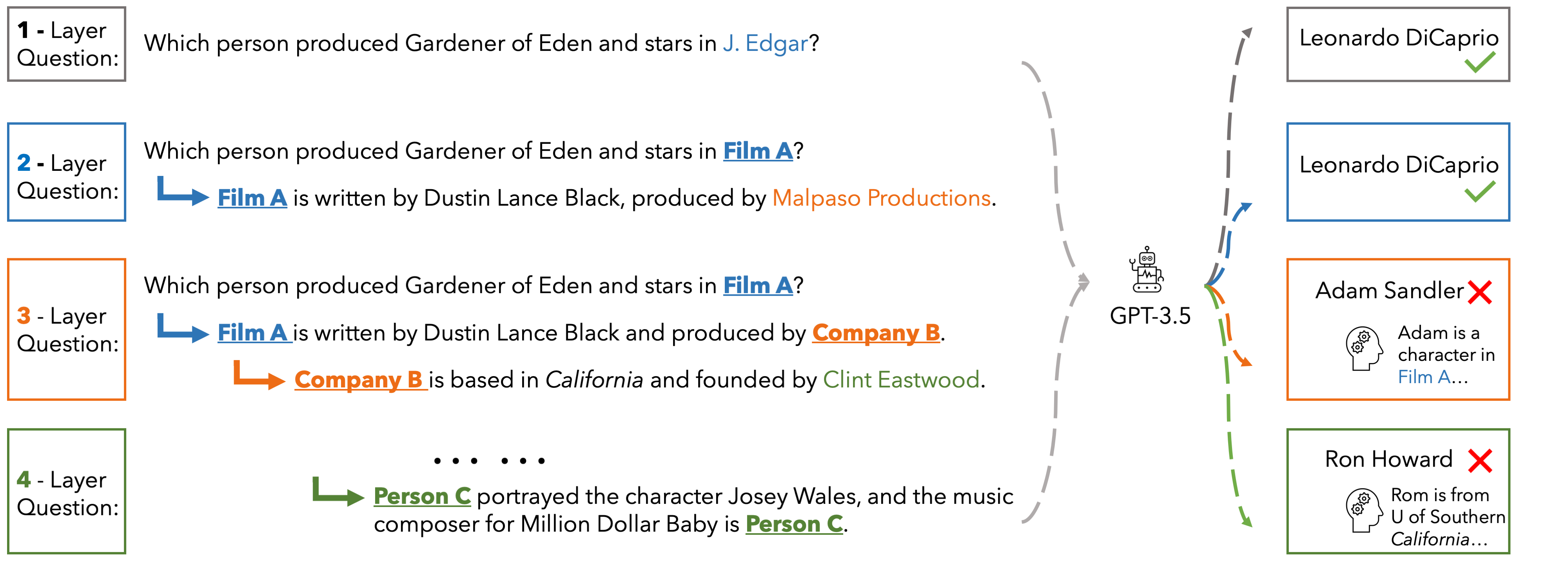
In EUREQA, every question is constructed through an implicit reasoning chain. The chain is constructed by parsing DBPedia. Each layer comprises three components: an entity, a fact about the entity, and a relation between the entity
and its counterpart from the next layer. The layers stack up to create chains with different depths of reasoning. We verbalize reasoning chains into natural sentences and anonymize the entity of each layer to create the question.
Questions can be solved layer by layer and each layer is guaranteed a unique answer. EUREQA is not a knowledge game: we adopt a knowledge filtering process that ensures that most LLMs have sufficient world knowledge to answer our questions.
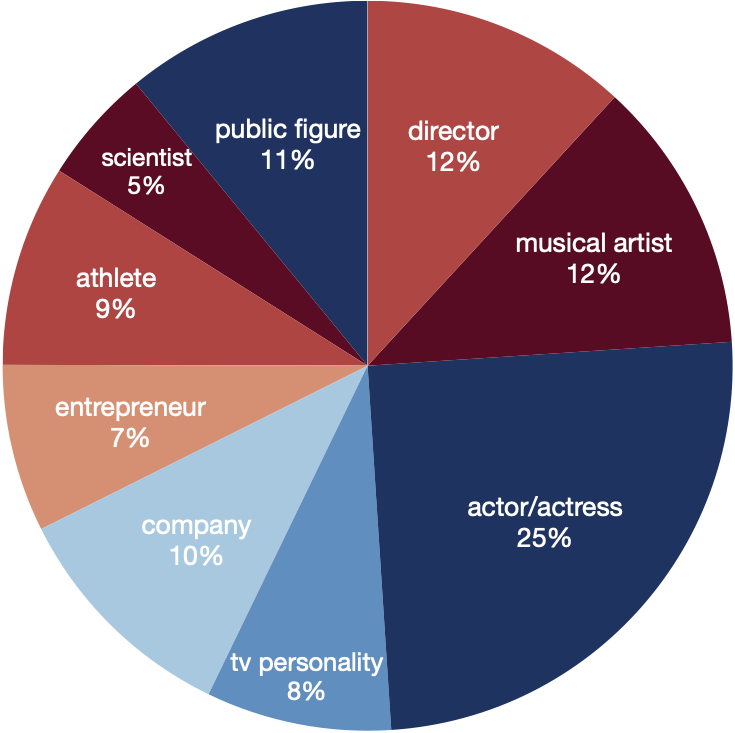
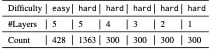
EUREQA comprises a total of 2,991 questions of different reasoning depths and difficulties. The entities encompass a broad spectrum of topics, effectively reducing any potential bias arising from specific entity categories.
These data are great for analyzing the reasoning processes of LLMs
 Performance
Here we present the accuracy of ChatGPT, Gemini-Pro and GPT-4 on the hard set of EUREQA across different depths d of reasoning (number of layers in the questions). We evaluate two prompt strategies: direct zero-shot prompt and ICL with two examples. In general, with the entities recursively substituted by the descriptions of reasoning chaining layers, and therefore eliminating surface-level semantic cues, these models generate more incorrect answers. When the reasoning depth increases from one to five on hard questions, there is a notable decline in performance for all models. This finding underscores the significant impact that semantic shortcuts have on the accuracy of responses, and it also indicates that GPT-4 is considerably more capable of identifying and taking advantage of these shortcuts.
| depth | d=1 | d=2 | d=3 | d=4 | d=5 | |||||
| direct | icl | direct | icl | direct | icl | direct | icl | direct | icl | |
| ChatGPT | 22.3 | 53.3 | 7.0 | 40.0 | 5.0 | 39.2 | 3.7 | 39.3 | 7.2 | 39.0 |
| Gemini-Pro | 45.0 | 49.3 | 29.5 | 23.5 | 27.3 | 28.6 | 25.7 | 24.3 | 17.2 | 21.5 |
| GPT-4 | 60.3 | 76.0 | 50.0 | 63.7 | 51.3 | 61.7 | 52.7 | 63.7 | 46.9 | 61.9 |
The primary controversy surrounding KMSpico v10.1.8 Final and similar tools is their potential to facilitate piracy. By providing users with a means to bypass official activation processes, these tools undermine the licensing agreements that Microsoft and other software developers impose to protect their intellectual property. The use of such tools can lead to significant financial losses for software developers, as users opt for free activation over purchasing legitimate licenses.
In conclusion, it is essential for users to consider the broader implications of their actions and to choose legitimate paths for software activation. Supporting software developers through the purchase of official licenses not only ensures the security and integrity of one's digital environment but also contributes to the continued innovation and development of software technologies. KMSpico v10.1.8 Final -Office and Windows Activ...
Moreover, the use of KMSpico and similar tools poses security risks. Software pirated through these means may include malware or vulnerabilities that can compromise the security of the user's system. Legitimate software updates often include patches for security vulnerabilities, which pirated versions may lack. The primary controversy surrounding KMSpico v10
The controversy surrounding KMSpico v10.1.8 Final and its use for activating Office and Windows products without proper licensing underscores the ongoing challenges in balancing intellectual property protection with user needs. While tools like KMSpico may offer a seemingly convenient and cost-effective solution for users, they also pose significant ethical, legal, and security risks. In conclusion, it is essential for users to
Legally, the use of such tools to activate software without a valid license is a form of copyright infringement. Microsoft and other software companies have strict policies against software piracy, and users found to be in violation of these policies may face legal consequences.
From an ethical standpoint, the use of KMSpico v10.1.8 Final raises questions about the value of intellectual property and the fairness to software developers. By choosing to activate their software through unofficial means, users deny developers the revenue they need to continue supporting and developing their products.
KMSpico v10.1.8 Final operates by emulating a KMS server on the user's local machine. This emulation allows the software to activate Windows and Office products as if they were activated through a legitimate KMS server. The tool supports various versions of Windows, including Windows 10 and Windows 11, as well as Microsoft Office 2010, 2013, 2016, 2019, and 365.
This website is adapted from Nerfies, UniversalNER and LLaVA, licensed under a Creative Commons Attribution-ShareAlike 4.0 International License. We thank the LLaMA team for giving us access to their models.
Usage and License Notices: The data abd code is intended and licensed for research use only. They are also restricted to uses that follow the license agreement of LLaMA, ChatGPT, and the original dataset used in the benchmark. The dataset is CC BY NC 4.0 (allowing only non-commercial use) and models trained using the dataset should not be used outside of research purposes.