Thank you

A Product Trainer will contact you within two business days to schedule a one-on-one training session.
The intervention began small. They persuaded a council member to let them pilot an experiment on a single corridor: a trio of streets that fed into the city’s busiest market. At dawn on a chilly Sunday, teams in reflective vests set bright, temporary signs and painted slender green connectors on asphalt where none had been before. The new markings narrowed certain lanes by a foot or two to create short loading bays, formalized a few right-turn slip lanes, and introduced staggered curb extensions that slowed cars gently but opened sightlines for pedestrians.
Their first move was to watch. For two weeks they stood at corners, on rooftops, and in buses, writing down where traffic stalled and why. They noticed the same things: mid-block pickups that turned two lanes into one, delivery vans double-parked at lunchtime, left-turners who backed up entire intersections, and pedestrians forced into long detours by overengineered crossings. The data told them something else too—many drivers weren’t trying to speed; they were trying to reach predictable, convenient gaps, and the city denied them those gaps. mini motorways unblocked
Over three years, the city’s transformation remained quiet but striking. Average travel times during peak shrank; vehicle idling lessened, and the city’s pulse slowed from frantic to manageable. The simple devices they used—micro-turn lanes, predictable loading bays, diagonal crosswalks, staggered signals—were modest compared to grand infrastructure projects but multiplied across the grid they unblocked the city like a series of tiny keys in a stubborn lock. The intervention began small
People began telling stories about a place that stopped feeling like a trap. A woman who commuted by bus read for the first time in years; a bike courier found regular routes that paid without risking life on the curb; the schoolteacher who had feared morning crossings now walked with her class across a bright-painted zebra. The market, once frantic, welcomed shoppers who lingered, and shopkeepers found returns steadier. The new markings narrowed certain lanes by a
The team didn’t stop. They learned which instruments mattered most: clear, predictable loading zones; prioritized crossings where human flows demanded them; small turn pockets that prevented long jams; and pockets of greening that coaxed drivers to slow without adding a single stop sign. Their approach was less about removing cars and more about making movement legible—so every driver, pedestrian, and courier could anticipate what came next.
A Product Trainer will contact you within two business days to schedule a one-on-one training session.
We’ve received your request for technical support. A Technical Support Specialist will contact you within 1 business day.
Your Target Market Request form has been sent. Your SocialCRM support agent will contact you to discuss any specifics, if needed.
Thank you for your interest in Mitchell 1 products. A Customer Service Agent will contact you within 1 business day.
Please allow 30 business days for your request to be processed.
We’ve received your request for assistance with your Mitchell 1 account. A Customer Service Agent will contact you within 1 business day.
We’ve received your request for a call back. A Customer Service Agent will contact you within 1 business day.
Thank you for contacting Mitchell 1 to discuss data integration opportunities. Clients who meet the requirements will be contacted to discuss a potential opportunity.
Your upgrade request for Accounting Link has been received. A Customer Service agent will contact you shortly.
Your details have been successfully submitted!
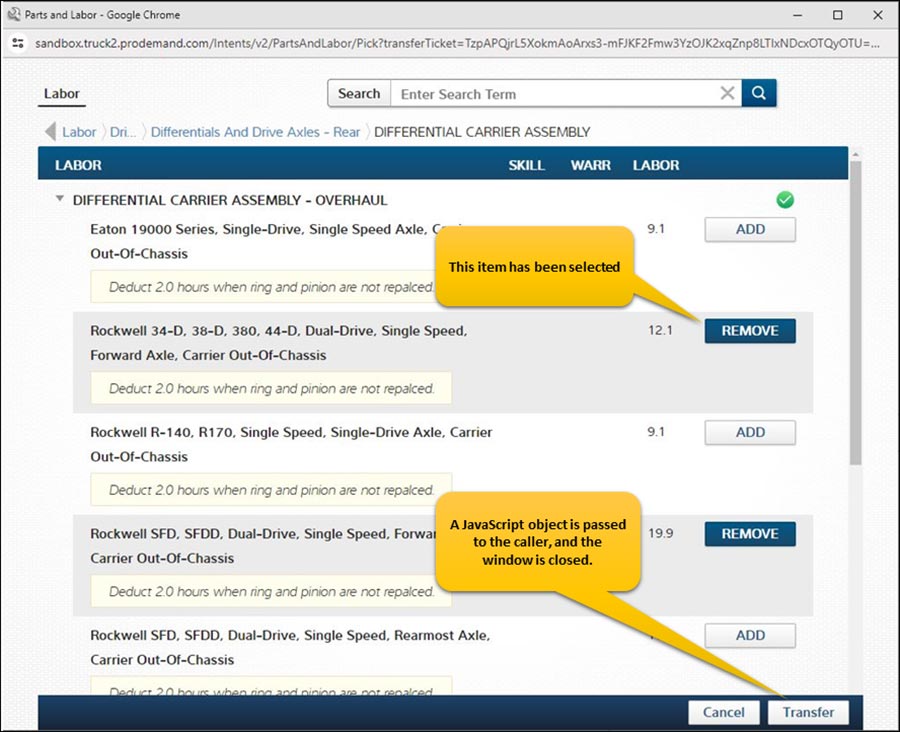
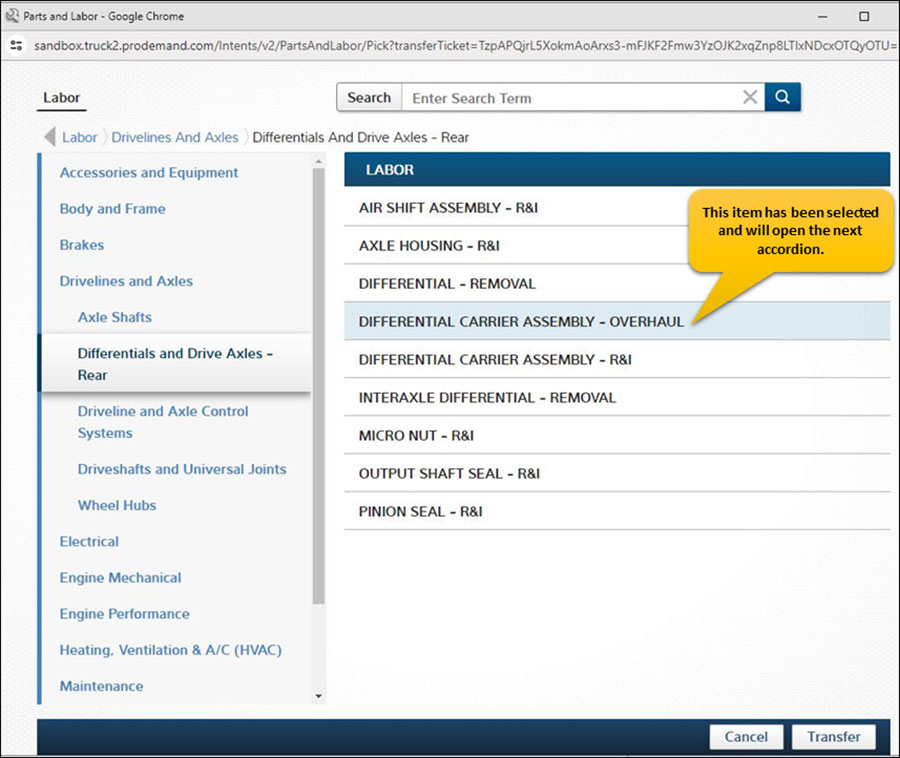
Direct Access—Pass-Through (transfer ticket) streamlines access straight into ProDemand Truck. Depending on the configuration, this workflow uses the user/password credentials or an account number. Your users can launch into ProDemand Truck, assuming they already have an active subscription.
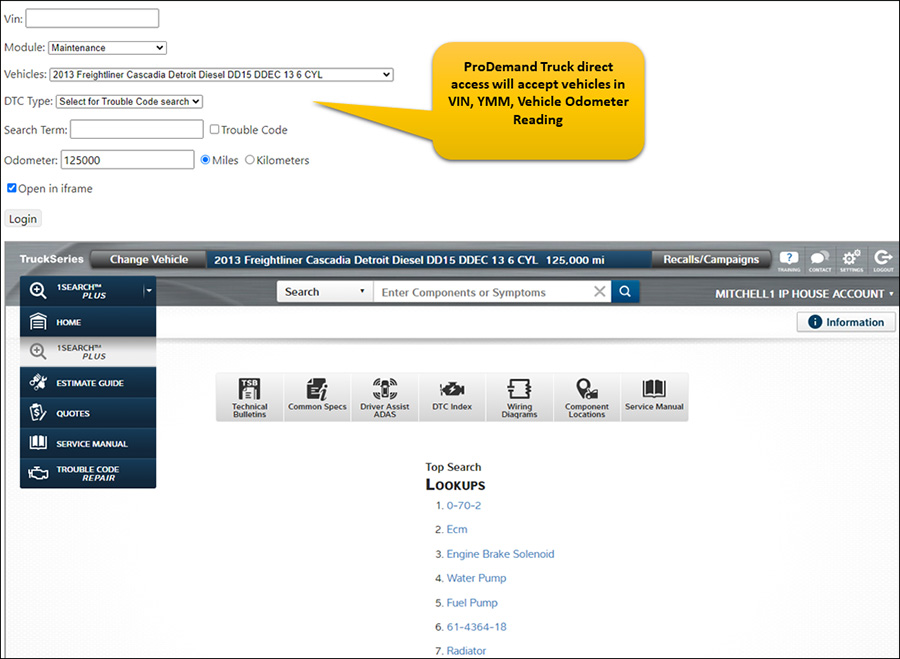
ProDemand Medium and Heavy-Duty Truck Class 4-8 has the following mechanisms for application-level integration with our repair content: (Labor)
Your users can launch the ProDemand Medium & Heavy-Duty Truck UI sub-sections, assuming they already have an active subscription.
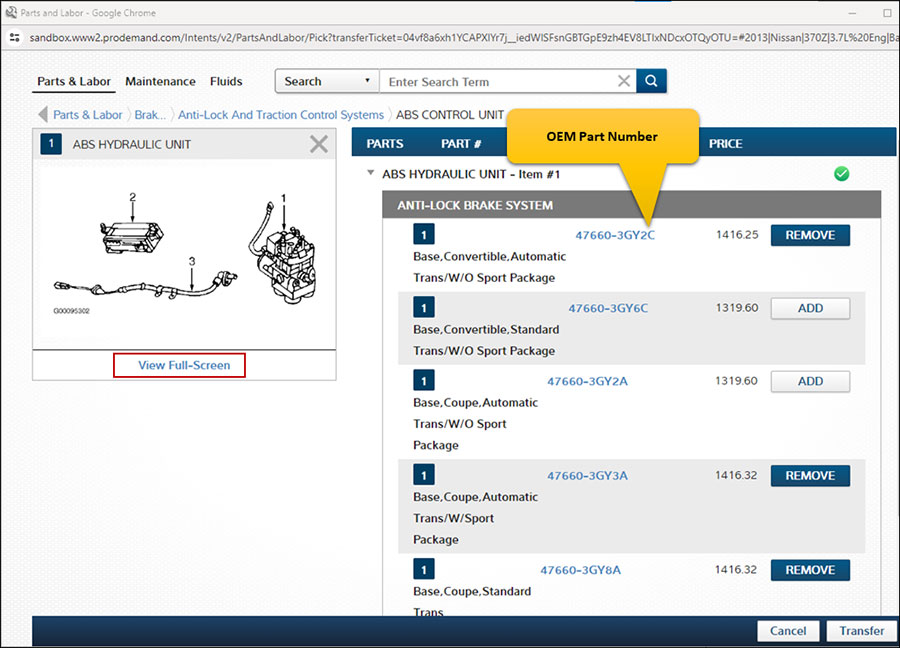
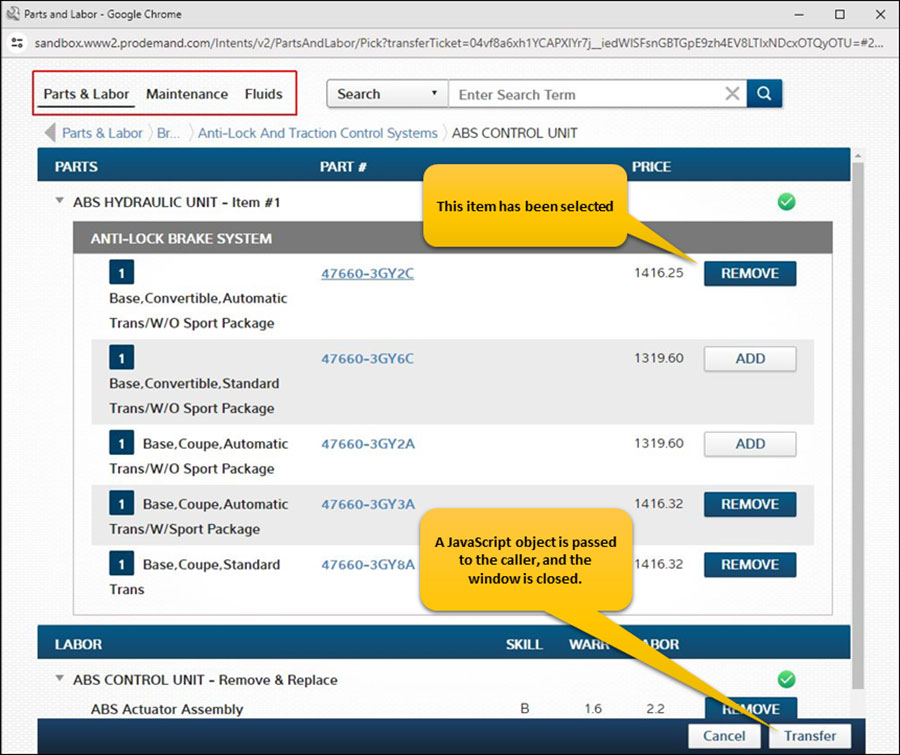
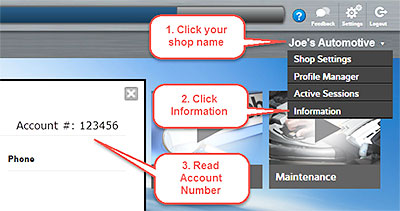
Direct Access—Pass-Through (transfer ticket) streamlines access straight into ProDemand. Depending on the configuration, this workflow uses the user/password credentials or an account number. Your users can launch into ProDemand, assuming they already have an active subscription.
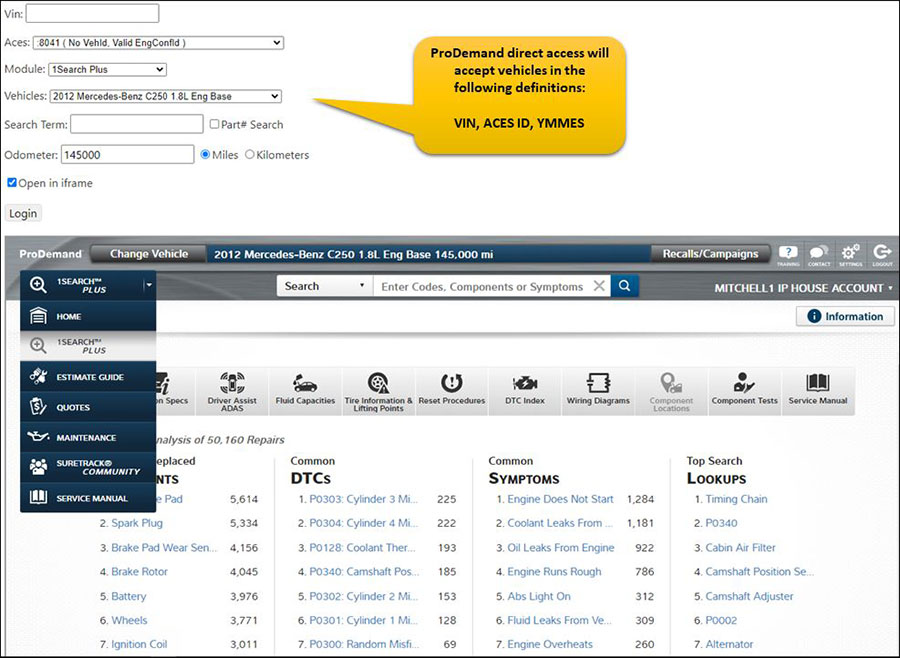
ProDemand Light Duty Automotive has the following mechanisms for application-level integration with our repair content: (Labor, Parts, Fluids, and Maintenance) Your users can launch the ProDemand Light Duty UI sub-sections, assuming they already have an active subscription.