Ts3 R4p3 -
LATEST BUILD: Release 12.5 - January 2025 (.Net Framework 4.x and .Net 8.0, 9.0).
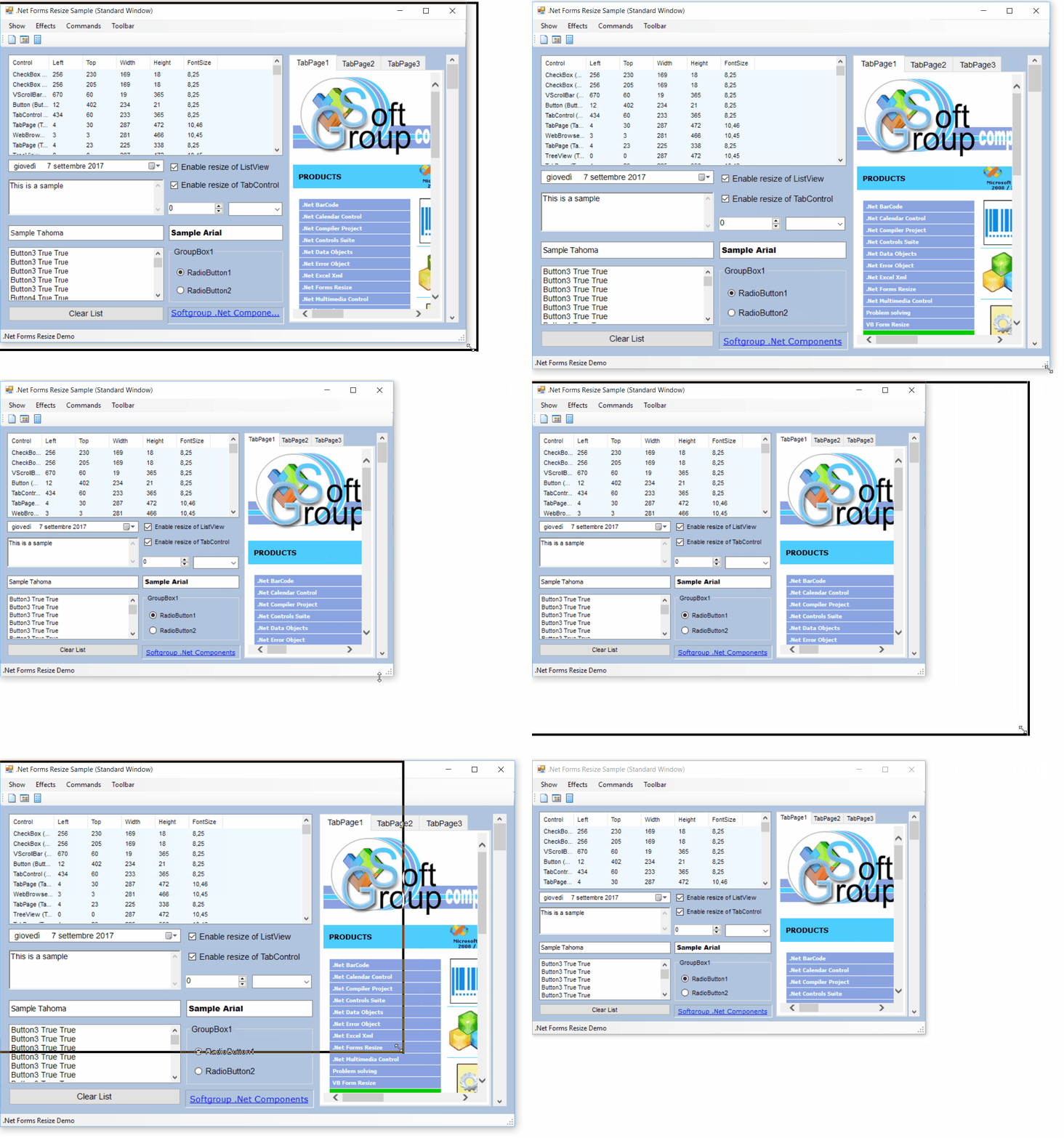
LATEST BUILD: Release 12.5 - January 2025 (.Net Framework 4.x and .Net 8.0, 9.0).
I should mention that while TS3's protocol is closed-source, R4P3 offers a method to explore it, contributing to the VoIP field. Highlighting the open aspects of the research, encouraging further exploration under ethical guidelines.
I need to ensure the paper is organized logically: Introduction, Protocol Overview, R4P3 Framework Design, Implementation, Evaluation Results, Discussion, Conclusion. Each section should build on the previous one. Also, making the language academic but accessible, avoiding overly technical jargon where possible.
I need to verify the accuracy of each section. For example, is TS3's encryption symmetric and AES-based? What about their authentication mechanism? Ensuring technical details are correct is crucial for credibility.
Ethical considerations are important here too. Since it's about protocol analysis, the paper should emphasize responsible use, avoiding malicious applications. Maybe a section on how the research promotes better security practices through proactive analysis.
Alright, time to start drafting each section with these points in mind, making sure to cover the key aspects of TS3 and the R4P3 framework, emphasizing the innovative approach and practical applications.
Wait, the user mentioned "Ts3 R4p3: draft an interesting paper." I need to make sure I cover both TS3 and R4P3. Maybe R4P3 is a tool or framework for exploring TS3? I should clarify that in the paper. Let me check the technical details again. TS3 is a VoIP solution, and reverse engineering its protocol could involve understanding its data transmission methods, security features, authentication processes.
Wait, the user might be looking for a detailed technical breakdown. Should I mention specific features of R4P3, like packet sniffing, manipulation, simulation? Including a case study or example demonstrating R4P3's capabilities would strengthen the paper. Maybe how it identifies vulnerabilities or optimizes performance in TS3.
Also, considering the audience—academics, developers, security researchers—tailoring the depth of each section accordingly. Including both technical specifics and broader context.
I should mention that while TS3's protocol is closed-source, R4P3 offers a method to explore it, contributing to the VoIP field. Highlighting the open aspects of the research, encouraging further exploration under ethical guidelines.
I need to ensure the paper is organized logically: Introduction, Protocol Overview, R4P3 Framework Design, Implementation, Evaluation Results, Discussion, Conclusion. Each section should build on the previous one. Also, making the language academic but accessible, avoiding overly technical jargon where possible.
I need to verify the accuracy of each section. For example, is TS3's encryption symmetric and AES-based? What about their authentication mechanism? Ensuring technical details are correct is crucial for credibility. Ts3 R4p3
Ethical considerations are important here too. Since it's about protocol analysis, the paper should emphasize responsible use, avoiding malicious applications. Maybe a section on how the research promotes better security practices through proactive analysis.
Alright, time to start drafting each section with these points in mind, making sure to cover the key aspects of TS3 and the R4P3 framework, emphasizing the innovative approach and practical applications. I should mention that while TS3's protocol is
Wait, the user mentioned "Ts3 R4p3: draft an interesting paper." I need to make sure I cover both TS3 and R4P3. Maybe R4P3 is a tool or framework for exploring TS3? I should clarify that in the paper. Let me check the technical details again. TS3 is a VoIP solution, and reverse engineering its protocol could involve understanding its data transmission methods, security features, authentication processes.
Wait, the user might be looking for a detailed technical breakdown. Should I mention specific features of R4P3, like packet sniffing, manipulation, simulation? Including a case study or example demonstrating R4P3's capabilities would strengthen the paper. Maybe how it identifies vulnerabilities or optimizes performance in TS3. Each section should build on the previous one
Also, considering the audience—academics, developers, security researchers—tailoring the depth of each section accordingly. Including both technical specifics and broader context.